
Breath Isn't the Beginner Lesson. It's the Whole Path.
September 17, 2026
There are exactly two moments most people mark with breath, without ever quite thinking of it that way. A newborn’s arrival isn’t really counted from the cutting of the cord — it’s that first independent cry, the first breath taken alone, that signals a life has actually started on its own terms. And at the other end, we still say someone “breathed their last,” as if breath itself were the thing quietly measuring the whole span in between.
Follow almost any serious body-mind discipline deep enough and you land in the same place. Yoga calls it pranayama. Daoist practice calls it tuna (吐纳) — literally “exhale and take in.” Meditation, in its plainest form, is often just watching the breath without trying to change it. Even modern physiology and psychology, arriving from a completely different direction, keep landing on breath as the mechanism that actually moves things. Each of those fields is, on its own, too large to finish learning in one lifetime. Strip away the terminology, the lineage, the philosophy stacked on top of each one, though, and the floor underneath nearly all of them turns out to be the same.
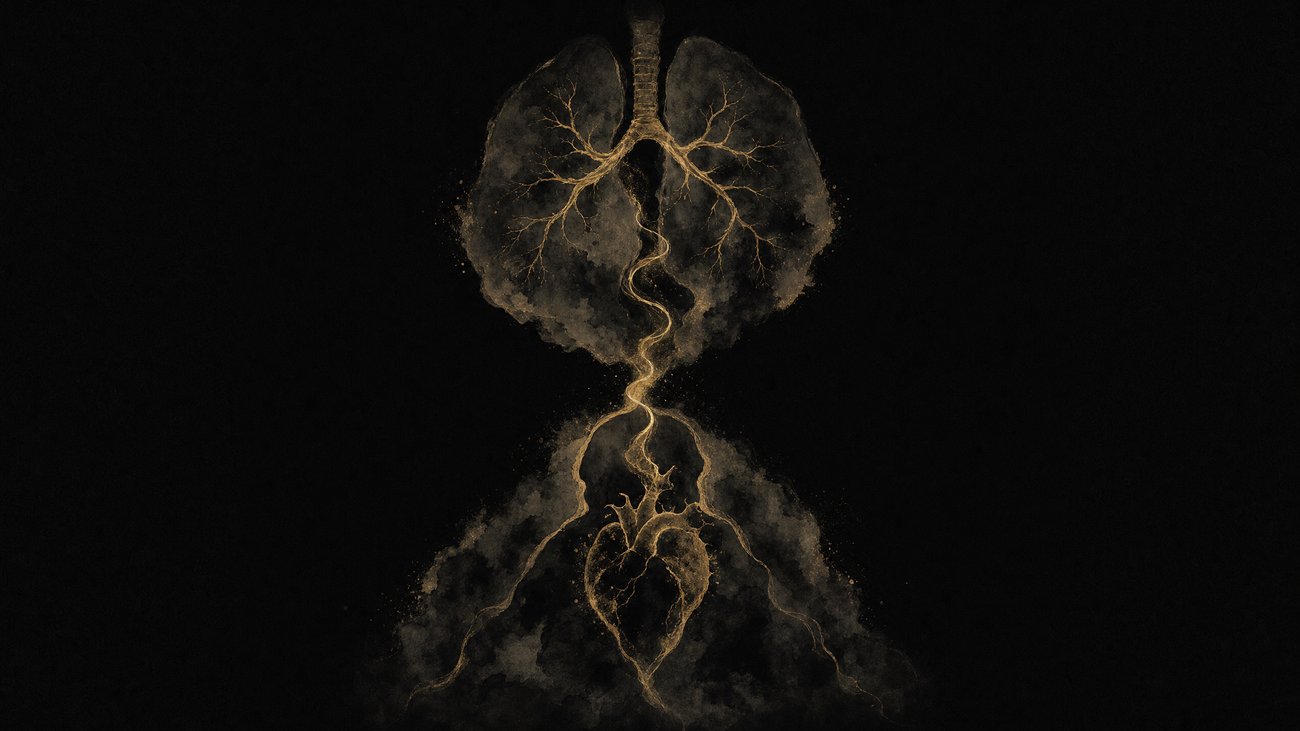
Older than thinking
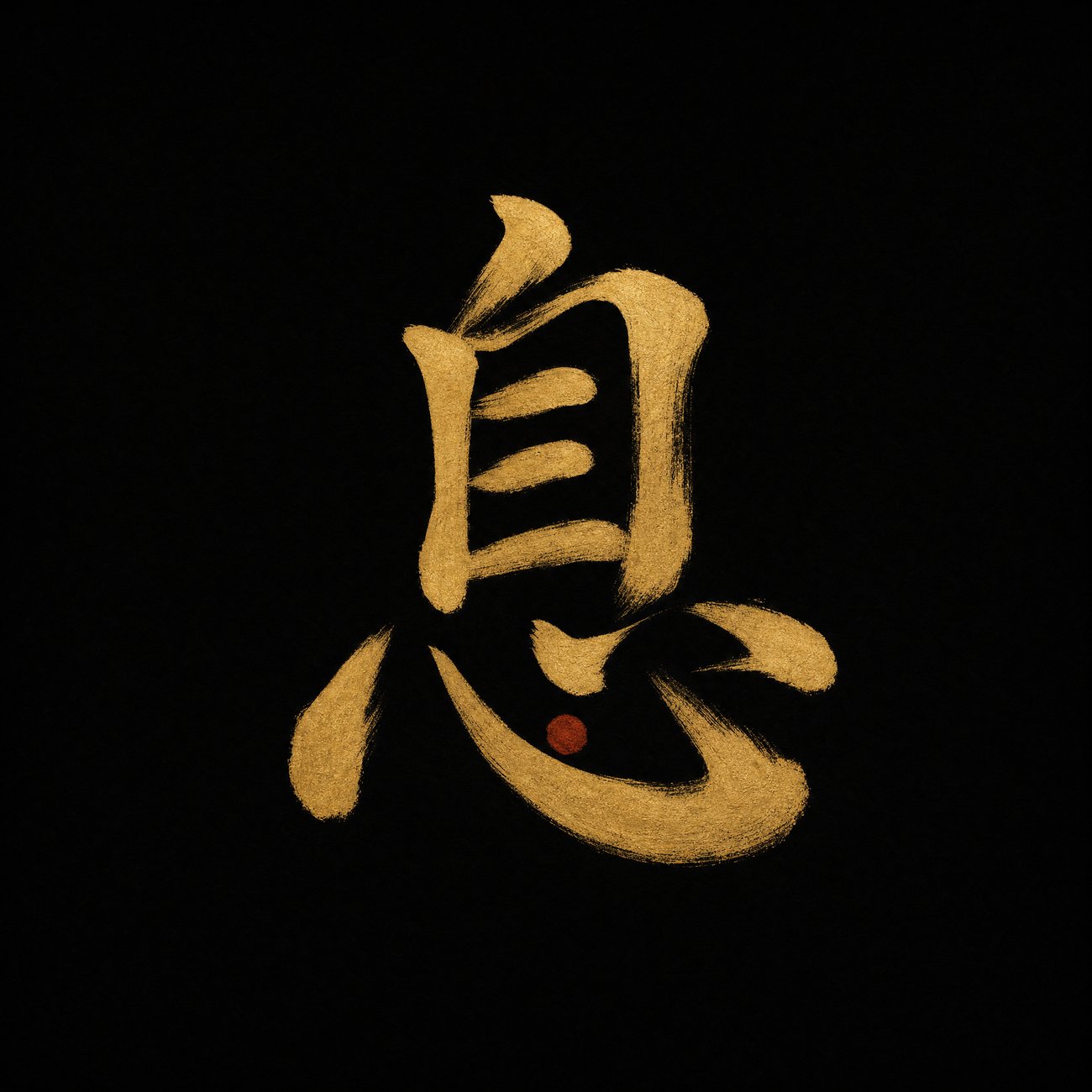
The Chinese character for breath, 息 (xī), is built from two pieces stacked on top of each other: 自 (self) sitting above 心 (heart). Read plainly, it’s “the heart that belongs to you” — self, resting on heart. It’s a reminder built directly into the language: breath was never just an oxygen exchange. It’s the thing running underneath everything else, quietly repeating the same message every few seconds, whether or not anyone’s listening — you are still here.
What’s actually happening in one breath
Ask most people what a breath is and you’ll get some version of: nose in, lungs fill, chest rises. That’s not wrong, exactly, but it’s a small fraction of what’s really going on. A real breath moves the diaphragm up and down like a piston, which shifts the pressure through the entire abdominal cavity, which the pelvic floor has to respond to, which the ribs and the spine both have to accommodate just to let it happen at all. A full breath is a whole-body event — a dozen structures cooperating, not one organ quietly doing a job by itself in the corner.
Your emotions are already rewriting how you breathe
Most of the time this runs one direction without anyone noticing: emotion changes breath, constantly, automatically, long before it ever reaches conscious attention. And it doesn’t do it the same way twice.
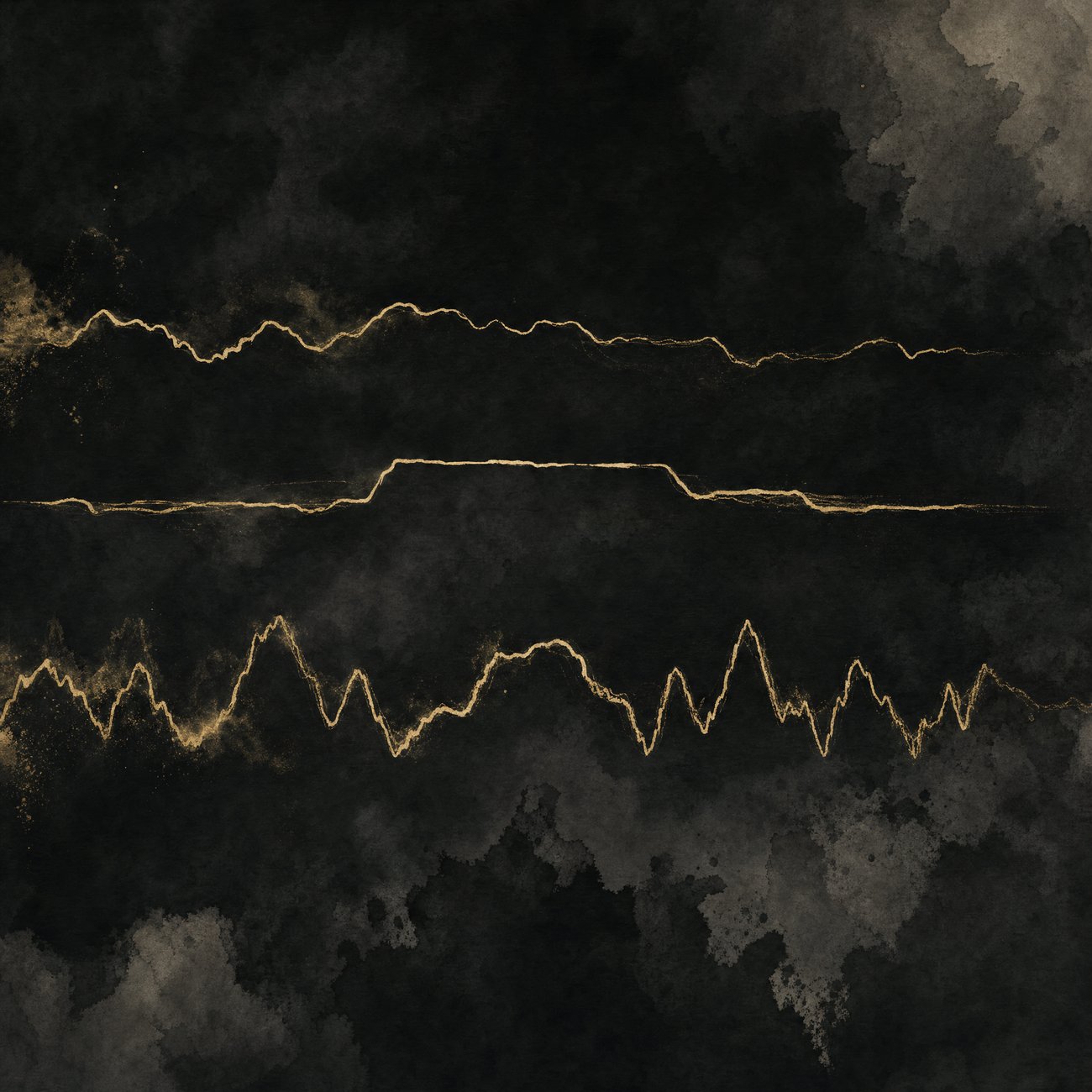
Long-running anxiety tends to make breath short and shallow — the rate climbs while the depth of each breath shrinks, and the exhale rarely finishes before the next inhale cuts in. Drawn as a line, it doesn’t look like a slow rolling wave. It looks like a tight, choppy chop — dense, but never building any real height.
Fear does something different. It tends to hold the breath — suspended partway, quiet, almost afraid to make a sound, the way a body goes still when it’s trying hard not to be noticed.
Chronic tension shows up differently again: a chest that won’t fully open, so the breath gets pushed up into the very top of the ribcage instead of dropping down, staying shallow and staying high, circling the collarbones without ever really landing.
Underneath all three there’s a real chain: the emotion shifts the state of the autonomic nervous system first, that shift changes how you breathe, and the way you’re breathing then feeds straight back into muscle tone and posture — each layer stacking on the last, until it adds up to how a person is actually carrying themselves, physically, in that particular moment.
The one function you can actually reach in and adjust
Here’s what makes breath different from almost everything else the body runs on its own: it’s semi-voluntary. You can’t simply order your heart to slow down and have it comply. You can do exactly that with breath — which means the chain above can also run backward. Deliberately slow it, deepen it, steady it, and you’re resetting the diaphragm and, through it, signaling the vagus nerve; that resets muscle tone; and that, working back up the same chain, reaches the nervous system and whatever emotion is sitting on top of it.
It’s why “take a deep breath” survives every culture’s version of stage fright. It isn’t a platitude. It’s someone, without necessarily knowing the mechanism, correctly reaching for the one lever in the body that actually runs in both directions.
What different traditions built around that one lever
Long before anyone could explain the physiology, whole techniques got built around that single lever. Kapalabhati — sometimes called “breath of fire” in the kundalini yoga tradition — uses short, forceful, repeated exhales to pump the belly in and out; it’s traditionally described as stimulating digestion, and the sheer physical action of repeatedly compressing the abdomen plausibly does something real to the organs underneath. Alternate-nostril breathing (nadi shodhana), closing one nostril at a time on a slow count, is traditionally used to settle the nervous system and sharpen focus — and whatever the exact mechanism, closing off half your airflow and forcing a slower, more deliberate breath is, mechanically, exactly the kind of thing that would do that.
So can breath actually heal you?
Not literally, and not in the dramatic, single-session way it sometimes gets sold as. But the reason breath keeps turning up at the bottom of so many different systems — rhythm, muscle tension, the autonomic nervous system, sleep, stress, how much you actually notice what’s happening in your own body, emotional regulation — is that it’s genuinely one of the only places in the body where all of those things meet. Pull on one thread and several others move with it, because they were never really separate threads to begin with.
That’s the whole of it, really. Breath isn’t a cure. It’s a bridge into all the other work you already do — and it’s a bridge you’re standing on right now, every few seconds, whether or not you’re paying it any attention at all.