
The System That's Quietly Built to Keep Ordinary People From Ever Waking Up
September 11, 2026
Something seems to work very hard, across an entire lifetime, to keep most people from ever really waking up.
Think back over sixteen-plus years of school — language, math, English, history, chemistry, biology, geography, civics. All useful, all real foundations for understanding the world. But not one of those courses ever taught how human nature actually works, how to make a real decision, how to spot a con, how to manage your own emotions, or how money actually moves. Those are the actual core skills an adult needs to stand on their own two feet in the world, and somehow none of them made it onto the curriculum.
That’s not an oversight. It’s not that schools forgot — it’s that they can’t teach it. If most people became fully clear-eyed about how things actually work, the existing balance and the existing order would lose their footing. And to be clear: this isn’t a conspiracy, and there’s no single architect behind it. It’s a structural force that’s evolved on its own over thousands of years of society settling into shape. Nobody has to operate it on purpose. It just needs you to stay exactly as you are.
Worth taking apart layer by layer, because each one is easier to see once it’s named.
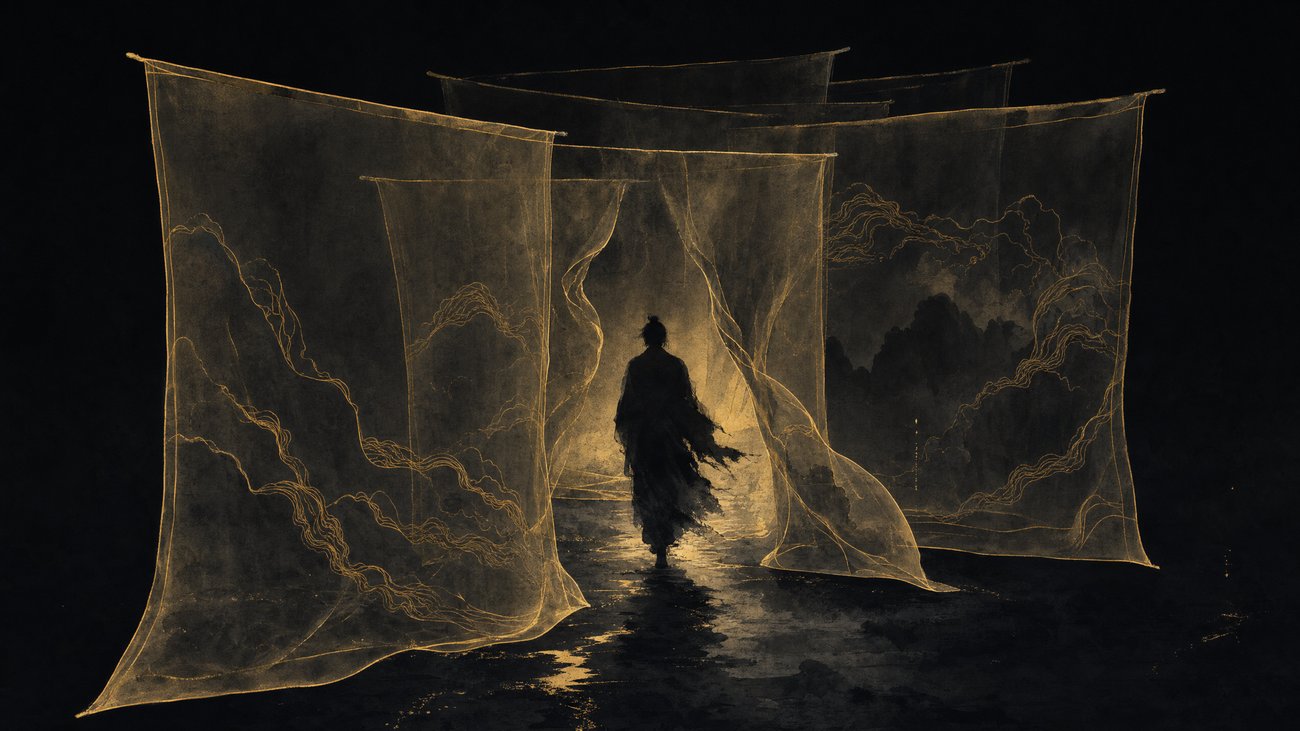
The first lock: busyness that leaves no room to think
How long has it been since you sat down with nothing to do and actually asked yourself what you want out of this life — this month, this year, this decade? A month? Longer? Do you even remember the last time? That’s not a personal failing. That’s a time structure, built with real precision, that leaves no gaps for it to happen in.
From the moment school starts, the day is packed edge to edge: early reading before class, back-to-back periods, a fixed lunch window, evening study hall, and homework stacked on top, day after day, week after week — five days of intensity, weekends spent on more practice tests, with no space left over for anything that isn’t scheduled.
Work makes it worse, not better. An eight-hour block takes most of the daylight, the commute eats another two hours coming and going, and the evening’s only free stretch disappears into cooking, cleaning, and errands. A little time scrolling a phone, and the day is over. Then the weekend arrives and gets spent on social obligations, the week’s backlog of chores, family time, and whatever went wrong that needs fixing. It looks like living. Mostly it’s just getting through the day.
What this actually does is burn your two most valuable resources — time and attention — on low-value tasks that produce no real growth, only wear. Someone permanently busy never has room to sit with a genuinely good book, review the choices that got them here, talk with someone wiser, or think seriously about where they actually stand and how to change it. Clear thinking and a real plan for your life both depend on uninterrupted solitude, and constant busyness removes that possibility before it can even start. Afraid of falling behind, afraid of being left out, people don’t dare stop moving long enough to look up. That refusal to ever stop is the first lock.
The second lock: noise that replaces real thought
If busyness steals the time to think, information overload wears down the capacity to do it at all. Open a short-video app and it never stops feeding you fragments. Open a news app and alerts stack up. Open any social feed and updates, opinions, and messages keep arriving. The brain spends all day sorting and processing a flood of disconnected input, and that sorting itself becomes its own drain.
Almost nobody stops to ask whether any of it is actually working — whether a thousand videos, a hundred articles, and endless group chats have sharpened judgment or solved a single real problem. Usually the honest answer is no. Understanding of the world stays shallow, decision-making doesn’t improve, and the same unresolved problems are still sitting there afterward.
Most of what fills that feed is noise, not signal. A celebrity’s divorce can spark curiosity and gossip but teaches nothing real about human nature. A video promising financial freedom in three steps can light up a brief fantasy, but it doesn’t lead to action and it doesn’t teach how wealth actually works. Noise’s real function is just to fill the mind and produce the feeling of learning — the sense of constant self-improvement — while almost none of it is ever actually digested. Less than one percent of everything scrolled through in a day tends to actually stick.
Once the mind is packed with fragments like that, there’s no real room left for independent thought. Worse, information overload quietly amplifies confirmation bias — the mind starts unconsciously filtering for whatever already matches its existing views, hardening old opinions while feeling like the opposite: open-minded, well-rounded, seeing every side. In reality, that’s often just a comfortable loop, playing the same thought pattern back on repeat.
The third lock: standard answers that kill independent thinking
This one starts the moment school does. Offer a different answer in class, and the response is simple: wrong, there’s one correct answer. Argue that your reasoning holds up, and the reply is that it isn’t what’s tested. In that moment, a signal lands: a different way of thinking is risky, and staying aligned with everyone else is the safe move.
That signal doesn’t stay in the classroom. At work, the manager’s view becomes doctrine, and the person who pushes back too often gets quietly sidelined. At home, an elder’s word is treated as beyond question, and disagreeing reads as disrespect. Online, when everyone around you has settled on one position, holding a different one marks you as the odd one out.
Over time, the brain doesn’t lose the ability to think independently — it learns not to risk it. Every attempt at an original thought carries the possibility of being shot down, and the brain, built to avoid risk, quietly chooses the safer road instead: going along with the crowd. That’s the actual mechanism behind conformity.
A lot of what feels like a personal opinion, if you look closely, was borrowed wholesale — inherited values from parents, a worldview absorbed from teachers, spending habits picked up from coworkers, a life philosophy lifted from whichever influencer was loudest. Stack enough of those borrowed pieces together and it can feel like a self. It isn’t — more like a paper figure with no skeleton underneath, ready to scatter in the first real wind.
Real awakening starts with doubting exactly those borrowed answers: is this standard answer actually correct? Does it actually apply to me? The moment that question gets asked honestly, the lock starts to loosen. Working back to first principles, setting aside every secondhand conclusion, and reasoning it through yourself is the only real key out of the standard-answer cage.
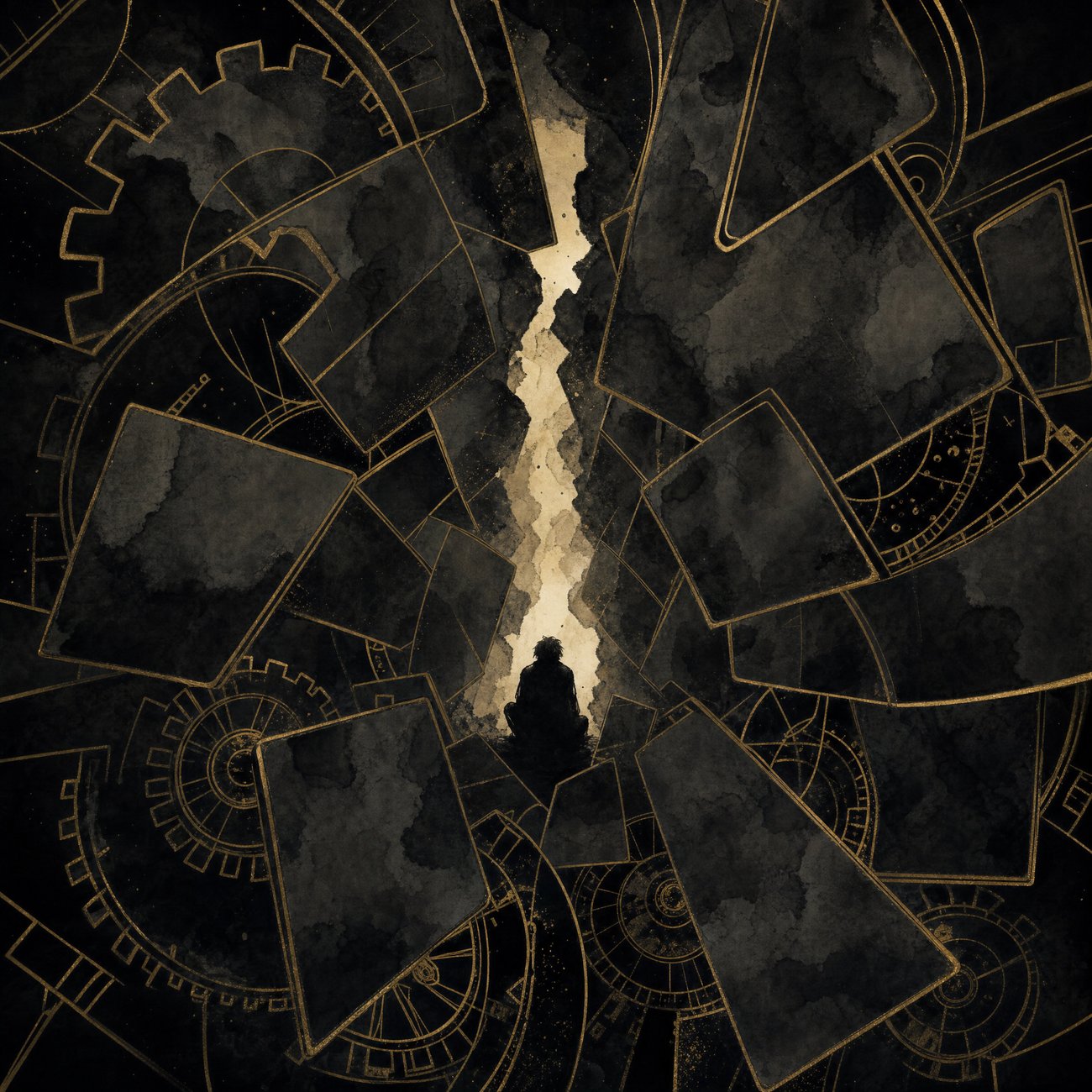
The fourth lock: instant pleasure that erodes patience
The first three locks can be resisted with plain awareness — stay alert to them and there’s a real chance to push back. The fourth is different. It’s rooted in basic biology rather than social structure, which makes it the hardest one to see and the hardest one to break.
A ten-second video built to spike emotion, a game with a reward every few minutes, food that shows up at the door within the hour, a short drama with a twist every scene — nearly everything competing for attention now runs on fast, frequent dopamine hits. Spend long enough inside that pattern and the brain’s whole architecture starts to reshape around it: only fast, easy pleasure feels worthwhile, and the patience for anything slow or boring quietly disappears.
Finishing a real book, building a real skill, sticking with a habit long enough for it to matter, sitting with a hard idea until it makes sense — none of that pays off immediately, and the instant-gratification brain instinctively resists all of it.
But those exact things — reading, thinking, practicing, accumulating, staying with something — are what actually produce real growth. The process has no built-in joy along the way. Often it’s genuinely tedious, and it demands showing up without applause or feedback for a long time. Instant pleasure quietly destroys precisely the capacity that matters most for an adult: the ability to tolerate boredom, keep compounding quietly, and wait for the payoff to arrive on its own schedule.
Real awakening was never a lightning-bolt moment. It’s what shows up after a long accumulation finally reaches a tipping point — and reaching that point requires staying with the work even when nothing is reinforcing it yet. A brain trained on instant reward can only really see the payoff directly in front of it, and stays blind to the one three, five, or ten years down the road. That long road has no dopamine anywhere along it. Everything actually worth having is waiting at the far end of it anyway.
The fifth lock: the circle you happen to be standing in
The last lock is the easiest one to miss entirely, because it doesn’t feel like a lock — it feels like the whole world. The information reaching you, the people you actually talk to, the version of reality you can see: all of it is shaped by which circle you happen to be standing in, and it can look nothing like someone else’s. Same city, different neighborhoods, different schools, different places, different conversations. What feels like “the world” is really just the slice of it your circle happens to show you.
Spend enough time somewhere that treats a standard job as the only respectable path, and it starts to feel like the only way to survive. If everyone around you insists starting something on your own is too risky, you won’t take the first step toward it. If everyone nearby is anxious about housing prices, school rankings, and job security, it starts to feel like the whole world is worried about exactly those things.
Meanwhile, in a different circle entirely, the conversation is about asset allocation, using knowledge as leverage, information asymmetry, long-term positioning. Not because those people are inherently sharper — because the quality of what reaches them is simply different.
Information quality sets a ceiling on how far thinking can go. The level of thinking shapes the quality of decisions. Decisions shape where a life actually ends up — and a life shaped by a narrow circle tends to stay inside that same circle, closing the loop. A low-information circle produces shallow thinking; shallow thinking produces weak decisions; weak decisions produce an average outcome, which quietly locks the same circle back into place.
The only real way through is deliberate: step outside the comfortable range, take in unfamiliar fields on purpose, sit with perspectives from a level up, talk to people outside the usual circle, read the books that actually stretch the view rather than confirm it. Every circle broken through like that is a real expansion — of the map, and of what starts to feel possible.
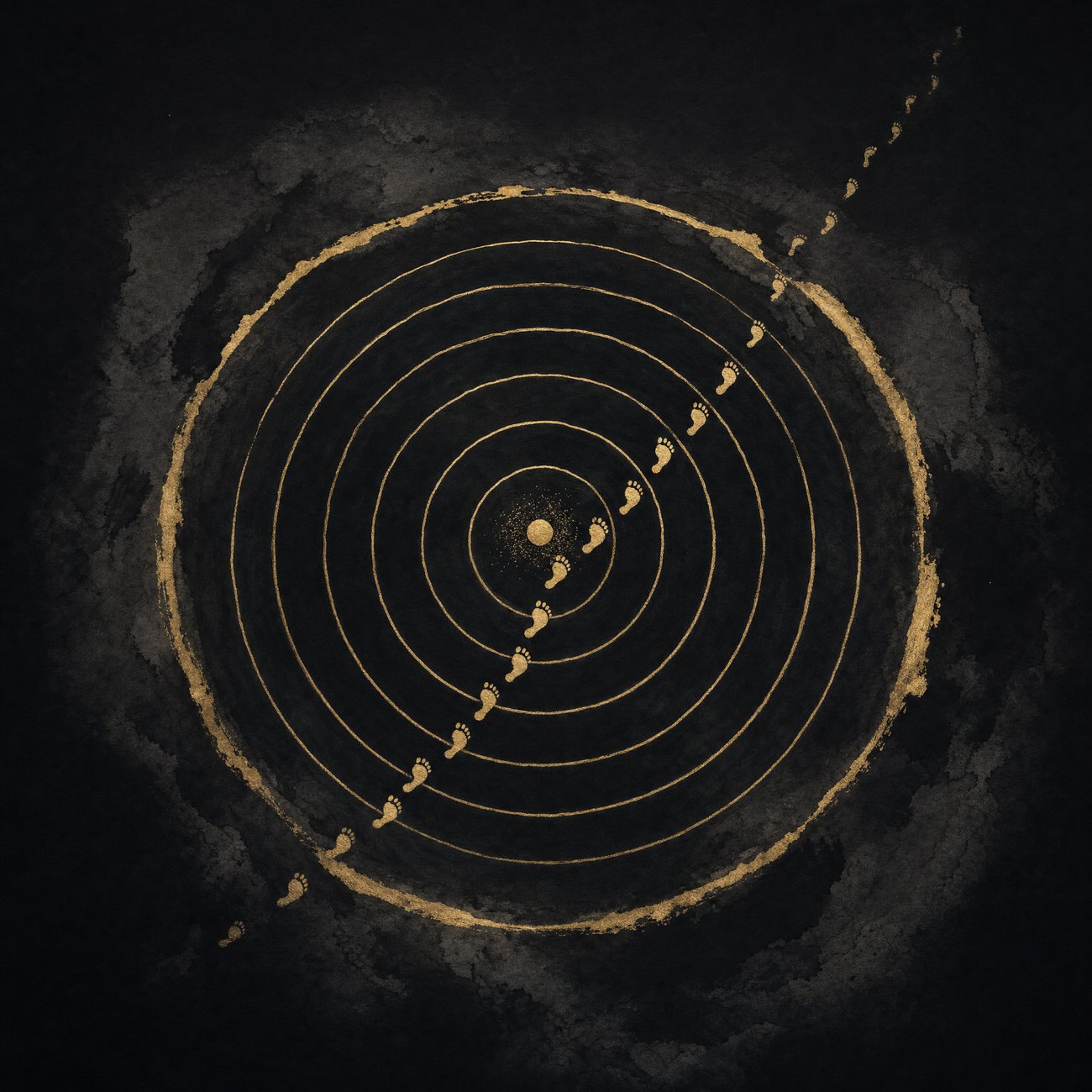
What’s actually being described here
Layered together, these five locks trap an enormous number of otherwise capable people: relentless busyness steals the time to think, information overload wears down the ability to think clearly, standard answers train independent judgment out of people early, instant gratification erodes the patience real growth requires, and a narrow circle caps how far anyone can see. None of it needed a single person to design it on purpose — it just quietly reinforces itself, and it’s remarkably good at keeping people running in place, spending real effort and getting nowhere.
Most people caught in this aren’t short on ability. They’re boxed in by lock after lock they never had a name for. Waking up, in the end, isn’t a gift handed to a lucky few — it’s closer to a slow, deliberate breakout from a cage most people don’t know they’re standing inside. It doesn’t happen all at once, and there’s no shortcut through it. But each lock actually identified and worked through makes the world a little clearer, and makes it a little harder for outside noise, other people’s opinions, or what’s “supposed to” matter to pull you around by the sleeve.
It’s the same unglamorous math behind any real practice worth keeping: the useful part was never going to arrive as a shortcut. Twenty quiet, undistracted minutes a day — spent on something with a real, if slow, payoff instead of an instant one — is a small, deliberate refusal of exactly the traps described above. It won’t feel dramatic while you’re in it. That’s usually the sign it’s actually working.