
White Dew: Why Everything Feels Dry No Matter How Much Water You Drink
September 1, 2026
Every year around this point on the calendar, the same thing happens: the mornings turn crisp, and a few days later my throat feels tight, my skin feels papery, and no amount of water actually helps. There’s an old line from the Book of Songs that gets quoted every year around now — reeds turning grey-green, white dew turning to frost — and it’s not just poetry. White Dew (白露) is one of the twenty-four solar terms, sitting right at the hinge between summer’s leftover heat and autumn’s real cold, and the old almanacs built an entire seasonal playbook around it.
Why dryness shows up right now
The solar term before White Dew is called “the heat stops” — a plain enough name for a plain enough job: the last of summer’s damp heat clearing out. What replaces it is a bigger swing between day and night temperatures. Warm air rises off the ground during the day; once it cools at night, that moisture condenses on grass and leaves as dew — the “white dew” the term is named for.

That same swing in temperature is what dries the air out. As humidity drops, autumn dryness stops being an abstract idea and starts being something you can feel: a dry throat and nose in the morning, tight or flaking skin, an occasional dry cough, chapped lips.
The old calendar marks White Dew with three signs, each one about five days apart: wild geese begin flying south, swallows head off after them, and the birds that stay behind start hoarding food for winter. Birds read temperature swings better than almost anything, so it’s fitting that all three signs are about birds — and the point isn’t really about birds at all. It’s the clearest seasonal cue there is that summer’s season of spending energy outward is over, and autumn’s season of drawing it back in and storing it has begun. Your own body is meant to make the same shift.

Three things are worth paying attention to as that shift happens: your fluids, your lungs, and your digestion.
Replenish your fluids
Not all autumn dryness is the same kind, and knowing which one you have changes what actually helps.
Early in autumn, while some of summer’s heat is still hanging around, dryness tends to be “warm dryness” — leftover heat that’s used up some of your body’s fluid. That kind is relatively simple to fix, like watering a pot of dry soil: you just add moisture back.
After White Dew, it shifts to “cool dryness,” and that one is more stubborn. Partly it’s because a whole summer of heat has already drawn down your reserves. Partly it’s because the cooling air makes it harder for whatever fluid you do have left to actually circulate to where it’s needed — your skin, your throat, your nose. The fluid is short and poorly distributed, which is why it can feel like nothing you drink actually lands anywhere.
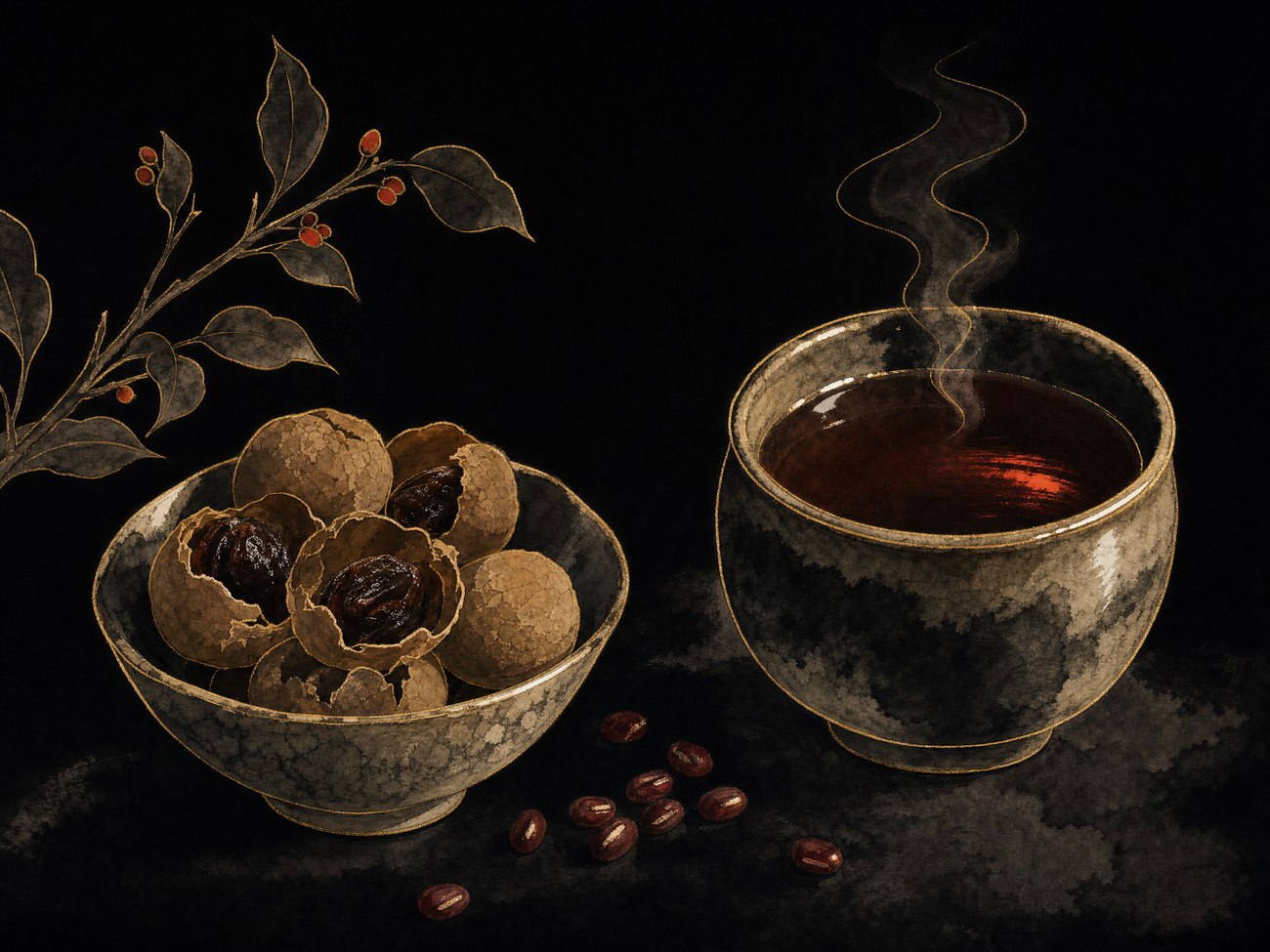
A few things that help with this specific kind of dry:
- Longan (dried or fresh) — juicy, sweet, and exactly in season right now. Fresh longan is full of water and gently replaces what a long summer burns through, without overcorrecting the way a heavier tonic might.
- A sour-plum-and-three-bean drink — sour plum (乌梅) paired with sugar to generate fluid through that classic sour-plus-sweet combination, while the beans clear out leftover damp heat and support the kidneys at the same time. It’s particularly good for a sore throat, a dry mouth or nose, or that itchy-throat feeling at night that makes you want to keep a glass of water by the bed — this drink does more for that than plain water does.
- Go easier on spicy food, lean on sour instead. The old dietary rule for autumn is “less pungent, more sour.” Heavy spice pushes your energy outward, which is exactly the wrong direction this time of year and makes the dry-mouth feeling worse.
- Cooler showers, shorter showers. Skin already produces less oil in autumn, so its natural moisture barrier is already thinner. A long, hot shower strips what’s left of it, and the dryness gets worse within the hour, not better.
Nourish your lungs
Autumn is considered the lungs’ season, and this time of year they’re doing double duty — pulling summer’s outward-facing energy back in while also being the organ most directly exposed to the season’s dryness (they connect straight out to your nose and skin). That’s the reasoning behind the old habit of eating “white” foods once White Dew arrives: yam, lotus root, lily bulb, snow fungus (white tremella), pear, white radish. They’re moistening in exactly the way dry lungs want, and modern nutrition points at part of why — several of them are rich in mucilage and polysaccharides that seem to genuinely support the respiratory lining.
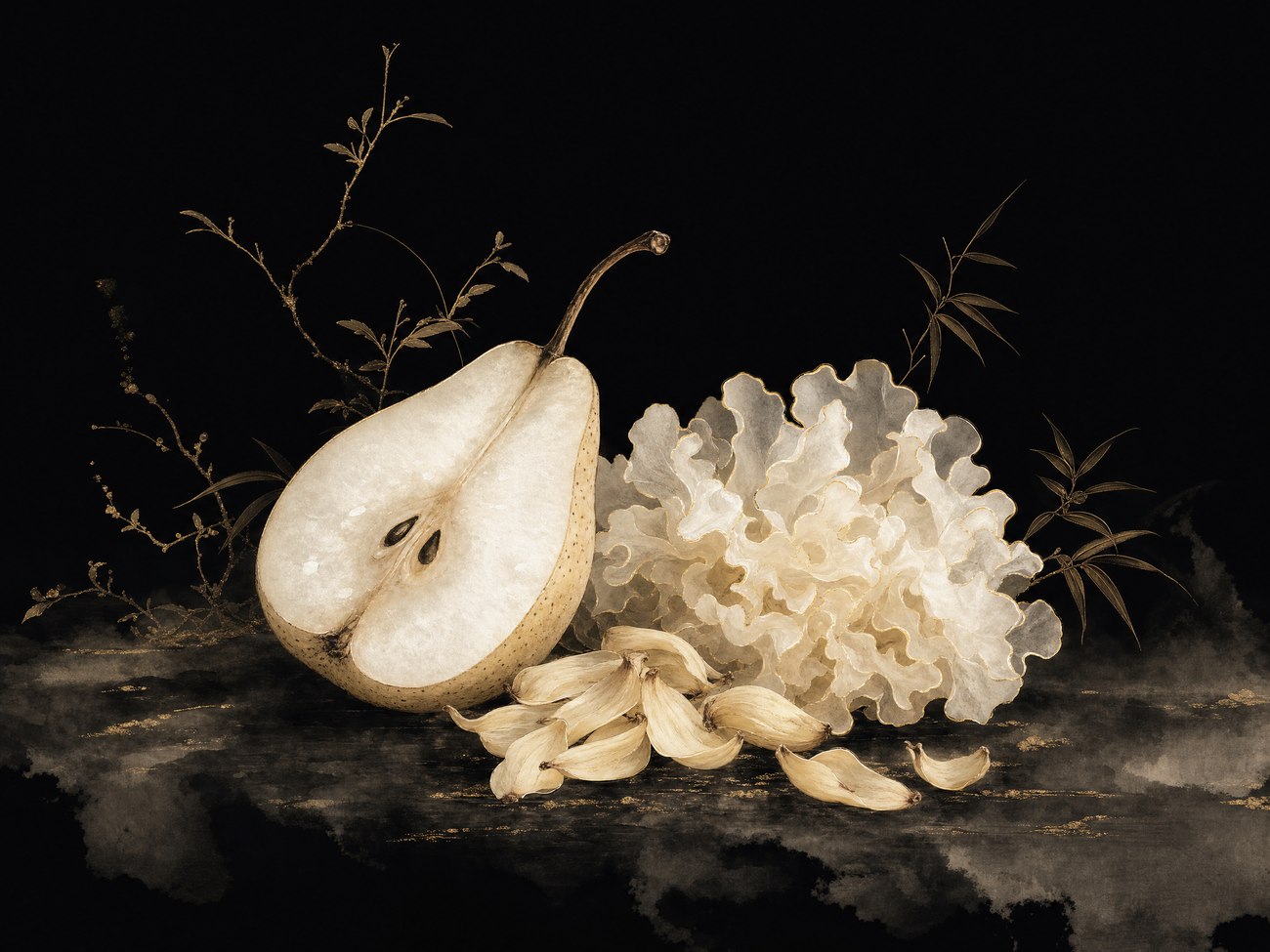
Pear is the one people reach for most, but how you eat it should depend on what’s actually going on for you, not just habit. A quick way to check: stick your tongue out. A thick white coating means there’s damp involved, not just plain dryness, and that changes the approach.
- Thick tongue coating, or some phlegm along with the dryness — skip eating it raw. Simmer chopped pear with a little dried tangerine peel for about ten minutes. The peel is warm where the pear is cold, so it balances the pear’s chill while also helping clear the damp, instead of adding to it.
- Plain dryness, clean tongue, no phlegm — a pot of pear simmered with snow fungus, dried plum, goji, and a little rock sugar until it turns silky and slightly thick is the easier route. It travels further than water alone and leaves a coating behind that a glass of water can’t.
- Dryness plus restless sleep — reach for lily bulb instead of pear. It’s calming as well as moistening, so simmered into a broth with snow fungus before bed, it tends to quiet a busy mind at the same time as it eases the dryness.
Support your digestion
There’s a reason lung health and digestion get talked about together this time of year, and it’s not just tradition for tradition’s sake: in five-element terms, the lungs (metal) are nourished by the spleen (earth) — earth generates metal. In plain terms, digestion is what actually turns food into the reserves your lungs, and everything else, run on. Feed the lungs without a digestive system that can absorb it, and none of it does much good.
Right after summer, digestion is usually still catching up — appetite tends to come back before digestive strength fully does, so pushing hard with rich tonics right now, or leaning on cold and raw food out of habit, tends to backfire. You end up with food just sitting there rather than being used.
A few signs you’re in this boat and should go easy rather than “supplementing hard”: your appetite is weak and you bloat easily after eating; your stool runs soft or loose; you catch a cold or hang onto a lingering cough every time the season changes; or you’ve felt physically heavy and foggy all summer with a thick coating on your tongue. If any of that sounds familiar, gentleness matters more than quantity right now.
The approach that actually works is unglamorous: warm, plain, unhurried food — cooked the way you’d simmer a slow pot of soup, not rushed. There’s an old saying that eating sweet potato around White Dew keeps acid reflux away for the whole year; whether or not that’s literally true, sweet potato is a genuinely good fit for the season — mild, easy to digest once it’s cooked soft, and it rebuilds gradually rather than forcing anything. Root vegetables in general, pulled straight from the ground this time of year, carry that same slow, grounding quality that suits the season. If cooking from scratch every day isn’t realistic, a simple spleen-supporting food-therapy blend — something like an eight-treasure powder or a poria cake — does a similar job with a lot less effort.
The point of all of it
White Dew is the hinge, not the destination — the wind carries a little more chill every week, the leaves start to turn, and everything outside is quietly pulling inward. The most useful thing you can do is follow the same instinct: bring your own energy back in, rather than continuing to spend it outward the way summer asks you to. A little pear soup, a little sweet potato, a little more care with fluids — none of it is complicated, and that’s really the point. Autumn wellness was never supposed to be complicated.