
The Real Signs of Poor Circulation (It's Not Just Cold Hands)
Published September 21, 2026
Ask most people what poor circulation looks like and they’ll say cold hands. That’s real, but it’s also just the most obvious entry in a much longer list — one that includes itchy skin, bruises that show up for no reason, cuts that take forever to heal, and a kind of foggy tiredness people usually blame on being busy. Most of these get treated as separate, unrelated annoyances. They’re often not.

How this actually happens
Poor circulation comes down to narrowed or restricted blood vessels — usually from a slow buildup of fat and cholesterol along the vessel walls, combined with a gradual loss of vessel elasticity. The result is that tissue further from the heart stops getting enough oxygen, nutrition, and warmth, and the metabolic waste it produces doesn’t get cleared out as fast as it should. Sitting for most of the day, chronic stress, and short sleep all speed this process along.
What your hands and feet are already telling you
Cold, numb hands and feet are usually the first sign, and it’s worth understanding on its own. A few others tend to show up alongside it: cramping during activity (reduced blood flow lets metabolic waste build up in the muscle, which triggers the cramp), bruising easily from bumps that shouldn’t leave a mark, and — the one that’s worth taking seriously — leg pain that forces you to stop walking after a certain distance and eases with rest. That last one is called intermittent claudication, and it points to an actual blockage in the arteries supplying the leg. It’s not something a daily routine fixes on its own.
There’s a simple check you can do at home: make a tight fist for about 30 seconds, then open your hand and watch the color return to your palm. It should happen almost immediately. If it consistently takes noticeably longer than that, it’s worth mentioning to a doctor.
What your skin is telling you
Dry, flaky, itchy skin gets treated as a moisturizer problem for years before anyone considers circulation. The mechanism is straightforward: skin that isn’t getting enough blood flow weakens as a barrier and doesn’t clear metabolic waste efficiently, and both of those irritate the nerve endings that register as itch. Most itching is still just ordinary dryness or allergy — but if moisturizer and the usual remedies haven’t touched it, and the itchy area lines up with where you’re also feeling cold or numb, that’s worth considering. People with high cholesterol sometimes also develop small yellowish deposits under the skin, often around the elbows or knees — another visible marker of the same underlying issue.
When it’s your head or your heart, not just “circulation”
Reduced blood flow to the brain shows up as dizziness and headaches, and in more pronounced cases, ringing in the ears, blurred vision, or trouble with balance. There’s one check here that matters more than any other, and it’s worth knowing by name: the FAST test, the standard stroke screen used internationally. Face — smile in a mirror and check whether one side droops. Arm — hold both arms out for ten seconds and check whether one drifts down. Speech — say a full sentence and check for slurring. If any one of those is off, the T is Time — call emergency services immediately. This isn’t a “keep an eye on it” situation; a delay here is the actual risk.
On the heart side: tightness, pressure, or breathlessness after climbing stairs or carrying something heavy — especially with cold sweat or nausea — deserves attention, not a shrug. Left alone, reduced blood flow to the heart over time can contribute to irregular heartbeat or heart failure. A simple home check: sit quietly for five minutes, then measure blood pressure in both arms. A difference that consistently runs more than about 10–15 points is a reason to bring it up with a doctor — it’s a real, if imperfect, screening signal for issues with the blood vessels themselves.
The everyday signs that get written off as “just tired”
Persistent fatigue, getting winded doing very little, cuts that take a long time to close, colds that linger longer than they used to, trouble concentrating or remembering things — every one of these gets filed under “getting older” or “too much going on.” Individually, maybe. Together, and persistent, they’re worth a second look. Swelling that starts around the ankles is another common sign, especially later in the day.
What Chinese medicine calls the same pattern
The article on cold hands and feet covered Blood deficiency and Yang deficiency — patterns built around not having enough: not enough blood, not enough internal heat. What’s described above — especially the unexplained bruising, the dark undertone some people notice in their lips, and the foggy memory — points to a different pattern: Blood Stasis and Qi Stagnation. This isn’t a shortage. It’s a traffic jam: the blood and qi themselves aren’t necessarily depleted, they’re just not moving the way they should, and whatever’s downstream of that jam stops getting nourished.
That distinction changes what actually helps. Deficiency patterns respond to nourishing — food therapy, calm restorative practice. Stagnation patterns respond to moving — which is exactly why qigong and other traditional movement practices are built around phrases like “moving the blood, resolving the stasis” rather than tonics alone.
A few minutes of actual movement
Being sedentary is one of the single biggest contributors here, so the highest-leverage fix is simply moving more often, not necessarily harder. A few specific things worth doing:
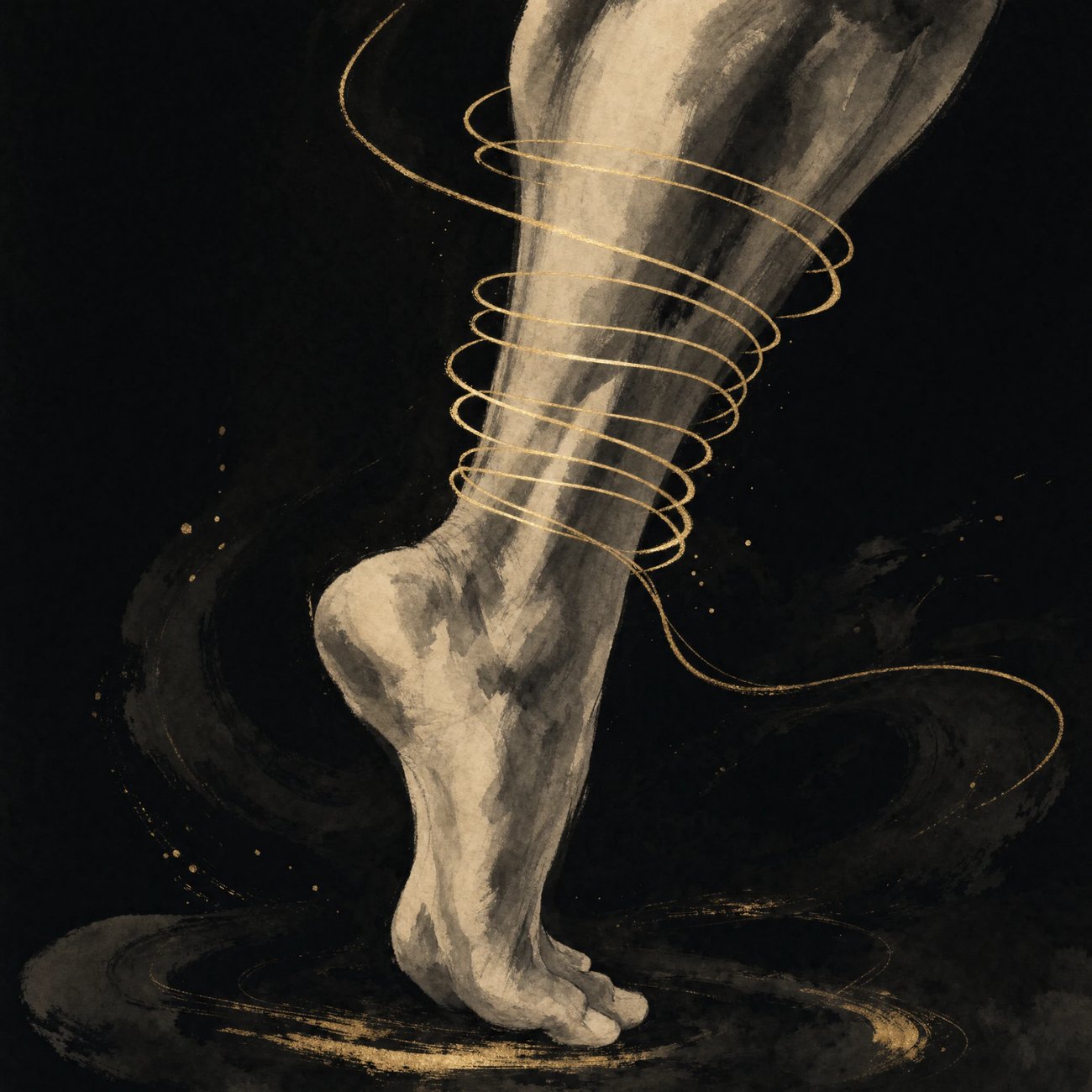
Ankle pumps. Sitting down, slowly flex your foot up, hold for a few seconds, then point it down and hold again. A few minutes of this every hour uses your calf muscles as a pump — the calf is sometimes called the body’s “second heart” for exactly this reason, since its contractions help push blood back up from the legs.
Calf raises. Stand and rise onto your toes, then lower — twenty or thirty reps, once an hour if you’re mostly sitting.
Leg elevation. Lying down with your legs raised above heart level for a few minutes every couple of hours gives gravity a hand instead of working against it.
One acupressure point worth trying
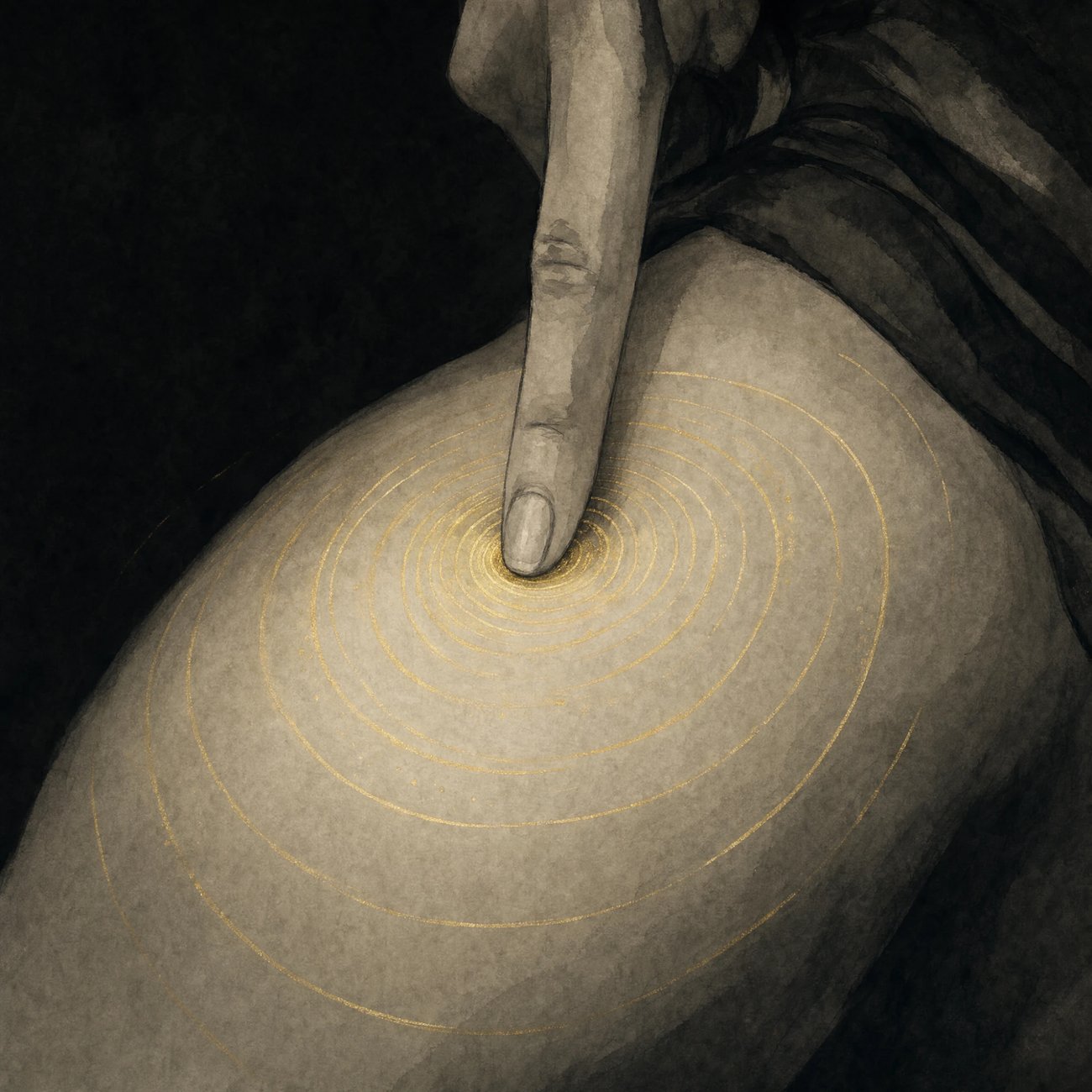
Traditional Chinese medicine has a point specifically associated with moving blood: Blood Sea (Xuehai), located on the inner thigh, just above the top of the muscle bulge near the knee. The traditional claim is that pressing and massaging it for two to three minutes, once or twice a day, helps nourish and move blood. It’s not a substitute for actual movement, but it’s a reasonable thing to add to it.
What to eat, kept simple
The underlying principle is easy to state even if it’s harder to live by: less fat, sugar, and salt; more fiber and quality protein; enough water. A few foods traditionally and nutritionally associated with vessel health: fatty fish like salmon and sardines, deeply colored produce like blueberries and purple cabbage, soy products, black fungus mushroom, and seaweed.
If you want to try a tea, one traditional combination is hawthorn, dried tangerine peel, chrysanthemum, and salvia root (danshen) — steeped in hot water for 15–20 minutes. Hawthorn and salvia are traditionally used to move blood, tangerine peel and chrysanthemum to move qi. One real caution worth taking seriously: salvia has genuine blood-thinning activity, so this isn’t a good choice if you’re pregnant, menstruating, or taking anticoagulant medication — check with a doctor first in any of those cases.
A quick self-check
If two or more of these sound like you, it’s worth getting checked rather than waiting it out:
- Hands and feet that are regularly cold or numb
- Color returns slowly to your palm after the fist test above
- Leg pain after walking a certain distance that forces you to stop
- Dizziness or headaches with no clear cause
- Chest tightness or breathlessness climbing stairs or exerting yourself
- Bruising easily from minor bumps
- A consistent, noticeable blood pressure difference between your arms
- Persistent fatigue or slow-healing cuts
This is a compilation of Traditional Chinese Medicine concepts and general health information, offered for educational purposes — not a medical diagnosis. If you notice any of the stroke warning signs above, treat it as an emergency. For anything else on this list that’s significant or persistent, please see a doctor before making changes to diet, supplements, or physical activity.