
The '12-Minute' Breathing Cure for Insomnia — And 5 Techniques That Came Before It
Published September 24, 2026
Search “how to cure insomnia in 12 minutes” and you’ll get the same answer ten times over: the 4-7-8 method. Inhale through your nose for 4 counts, hold for 7, exhale through your mouth for 8. It’s a real technique — Dr. Andrew Weil put it together, drawing on an old yogic breath ratio, and it does what it claims to do: slow you down enough to make sleep possible. Nobody’s cured in 12 minutes. What actually happens is your nervous system gets a strong enough signal to stop treating the dark room like a problem to solve.
Here’s the part none of those articles mention: for a lot of people lying awake with a spinning mind, counting to 7 and holding your breath is one more task. It’s better than nothing, but it asks the exact part of your brain that won’t shut off — the part keeping score — to keep score on your breathing too.

Breath-based sleep techniques didn’t start with a doctor in the 1990s. Chinese breathing practice has been doing this for a very long time, and it never settled on just one method. Some of what follows uses counting. Most of it doesn’t — you’re meant to stop counting anything, which turns out to be the whole point.
1. Listening to your breath
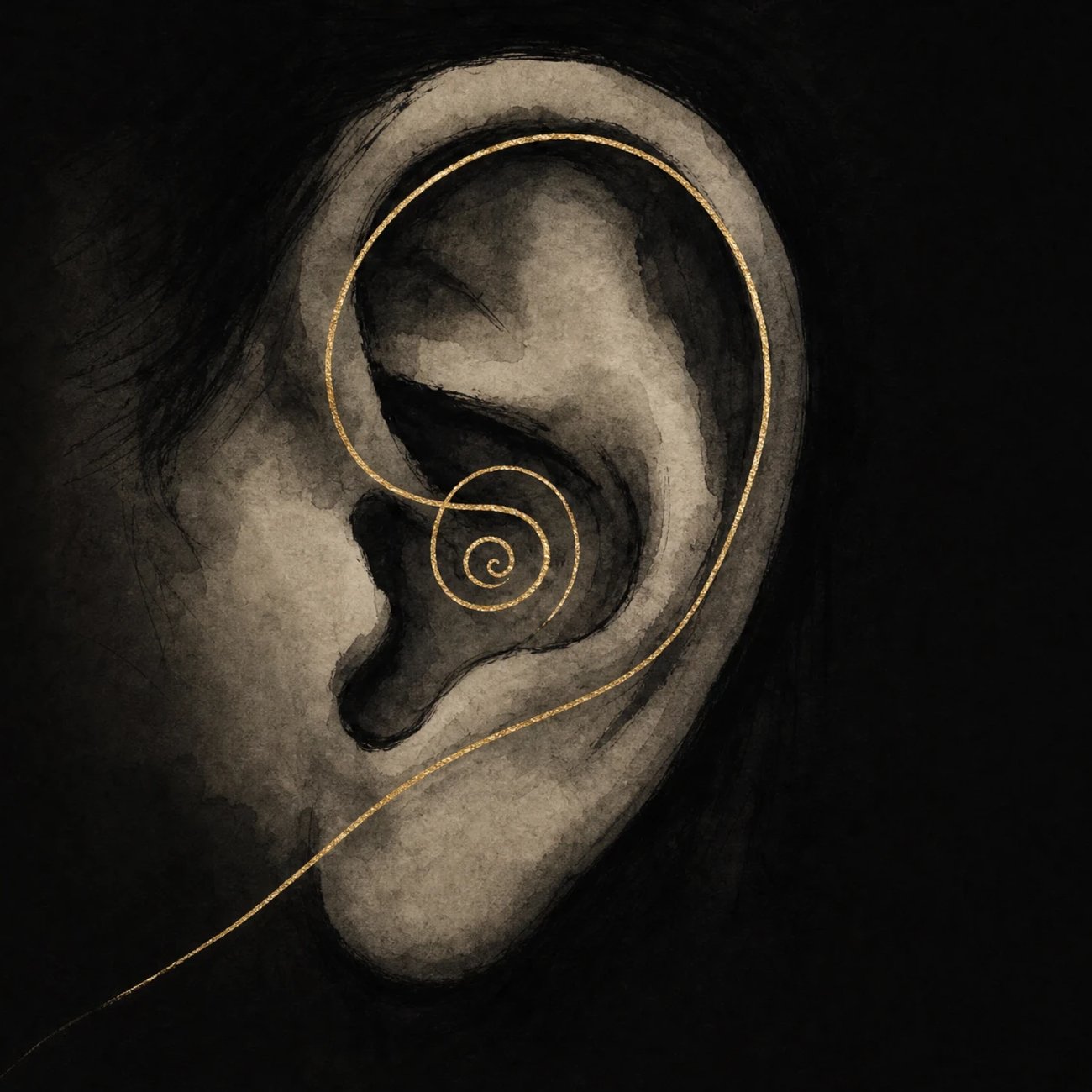
This one has a name — 听息法, the “listening method” — and it’s attributed all the way back to a line in Zhuangzi about quieting the mind by giving it exactly one thing to do. There’s no technique to get wrong.
Lie down on your back or side, close your eyes, and let your whole body go loose. Don’t try to breathe slower or deeper. Just listen — to the air moving in, the pause, the air moving out. Don’t judge whether it’s fast or slow, shallow or deep. Just notice it’s happening.
If you can’t actually hear anything, that’s fine. Knowing “I’m listening for my breath right now” is enough — the point isn’t your ears, it’s giving your attention one boring, repetitive place to rest instead of ten places at once. People who’ve practiced this a while describe the breath and the listening sort of merging, until thought quietly drops out and sleep just arrives. If you only try one thing from this list, make it this one — it’s the gentlest entry point and it asks nothing of you except attention.
2. The small-orbit sleep breath
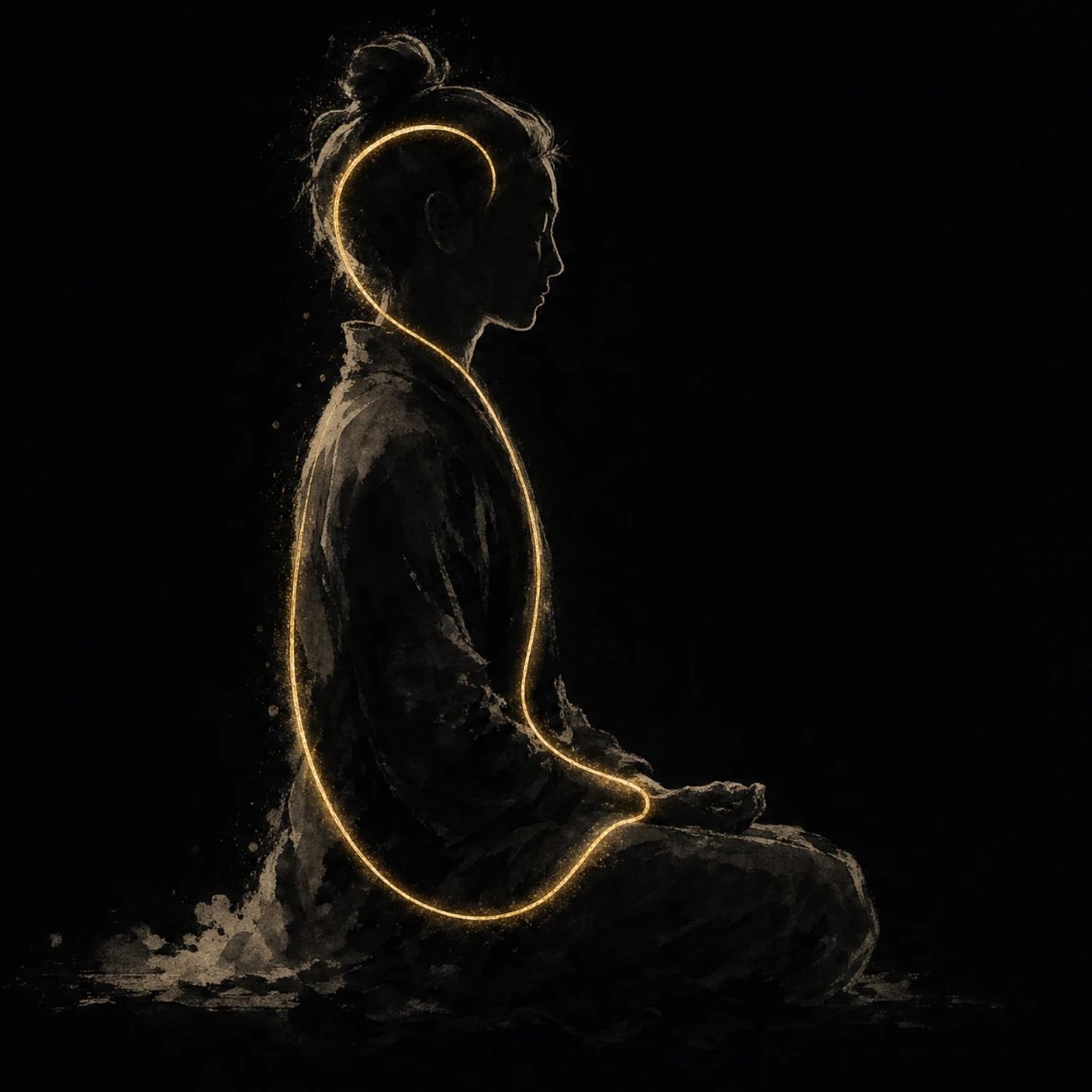
This one borrows from what’s called the microcosmic orbit in internal alchemy practice — tracing a loop along the body’s two central channels, the Governing Vessel up the spine and the Conception Vessel down the front.
Lie on your back, hands resting lightly on your lower abdomen, palms down. Breathe in slowly through your nose like you’re filling your whole body with air; as you breathe out through your mouth, let your attention travel from your head down to your feet, loosening as it goes, like you’re settling into fog. On the next in-breath, imagine that sense of fullness rising from your lower belly, around the base of the spine, and up your back to the crown of your head. On the out-breath, let it flow back down the front of your body to your belly.
If tracing the actual pathway feels like a lot to hold onto, don’t force it — the simplified version is just as real: breathe in, feel it rise to the crown; breathe out, feel it settle back into your lower belly. Repeat until you’re asleep. People who use this one regularly tend to describe it as doubling as a quiet way to build energy, not just a sleep aid.
3. Following the breath at your dantian
Lie on your right side if you can — that position is traditionally preferred here — eyes gently closed, body loose. Breathe with your belly: it rises on the in-breath, falls on the out-breath. Rest your attention at your dantian, a spot a few fingers below your navel, and let your mind simply follow the rise and fall rather than direct it. Resting a hand on your stomach helps some people feel the movement more clearly if their attention keeps drifting.
Belly breathing doesn’t come naturally to everyone the first few nights — most of us breathe shallow, into the chest. Don’t force it into place. Breathe normally for now and check back in after a few nights of a few minutes each; the belly tends to start moving with the breath on its own once the habit sets in. Stay with it until thoughts stop landing and sleep takes over.
4. One word in, one word out
This one gives your mind an anchor that isn’t a number. Lie on your back, limbs loose. Breathe slowly and evenly, and as you inhale, silently think “still.” As you exhale, think “relax.” At the same time, let each exhale soften one part of your body in sequence — scalp, then face, then shoulders, then chest, then belly, then legs, then feet. Run through the sequence three to nine times.
This works especially well if your problem isn’t a racing heart, it’s a mind that won’t stop narrating. Giving it two words to hold onto, tied to the breath itself, tends to quiet the noise faster than trying to think about nothing at all. Some describe the state at the end of this one as feeling like the body is floating in mist.
5. The yawn method
The fastest one on this list, and the strangest to describe. Sit or lie on your side, eyes closed. Let your jaw drop back slightly — no effort, just let it settle. Open your mouth wide and breathe in deeply through your nose, then let the breath out on its own, without directing it.
Within a few minutes this reliably triggers a real yawn, sometimes several in a row, through the same jaw and breath mechanics that make yawns contagious in the first place. Once the yawns start, drowsiness tends to follow close behind. This is the one worth trying on the nights you’re exhausted but still tossing and turning — it works with that state rather than against it.
The one with the wildest claim
There’s a sixth technique, sometimes taught alongside these: lie down, relax completely, and press your index fingers gently into your ears to block outside sound. Then do the same thing as technique #1 — just listen to your own breath, now with the rest of the world muted. One account of this being tried with a class of schoolchildren claims over 90% were asleep within about five minutes. That specific number doesn’t come from anything you could actually check, so treat it as the kind of thing people say about a technique they genuinely like, not a study result. What’s true regardless: blocking outside sound removes one more thing your attention could latch onto, and for some people that’s the difference that matters.
When breathing alone isn’t enough
If what’s keeping you up most nights is closer to a racing, anxious mind than a body that’s merely restless, it’s worth reading how anxiety actually shows up in your breathing — the same shallow, high-chest breathing pattern that anxiety produces during the day is often still running at night, and these techniques work by directly overriding it.
What I’ve actually noticed
I don’t always sit down and “practice” these the way that sounds — deliberate, disciplined, a session. More often it’s the opposite: I’m tired enough that lying down and doing one of these feels easier than lying there doing nothing, so I start following the breath at my dantian or just listening to it, half expecting to keep going for a while. And then I don’t remember finishing. The practice turns into the sleep before I notice the handoff. That’s probably the most honest thing I can say about all five of these — they work best when you stop treating them as something you have to get right.
If mornings, not nights, are where your energy problem actually shows up — feeling cold, slow to wake, low on drive even after a full night’s sleep — standing meditation is the practice built around rebuilding that kind of energy at the source, rather than patching sleep one night at a time. It’s free to start with.
This is a compilation of traditional Chinese breathing practices, offered for educational and self-care purposes — not a medical diagnosis or treatment. If insomnia is frequent, severe, or affecting your daily life, please talk to a doctor rather than relying on breathing techniques alone.