
What Deficiency Causes Cold Hands and Feet? (And When It Isn't a Deficiency at All)
Published September 20, 2026
Search “why are my hands and feet always cold” and you land in two completely different conversations. One is about iron and B12. The other is about something called Yang deficiency. They sound like they’re arguing with each other, but they’re really just describing the same problem from two angles — one asks what raw material you’re running short on, the other asks whether the furnace itself is burning hot enough. Put them side by side and the picture gets clearer, not muddier.
Is it actually about your heart?
Some people asking this are really worried about their heart or their blood vessels, and that deserves a straight answer before anything else. Cold hands and feet can come from narrowed arteries — cholesterol and fat building up along the vessel walls until blood has trouble reaching the far ends of your limbs. One real warning sign is intermittent claudication: leg pain that shows up after walking a certain distance and forces you to stop, then eases with rest. If that’s part of your picture, or the cold comes with pain, numbness, skin that’s turned pale or bluish, or slow-healing cuts, that’s not something a warmer sock fixes — get a vascular ultrasound.
For most people reading this, though, that’s not what’s going on. The far more common causes are things you can actually do something about.
The most common cause: not enough iron
Iron is the raw material for hemoglobin, and hemoglobin is what actually carries oxygen and heat out to your hands and feet. Run low on iron and your red blood cells can’t carry as much oxygen — the extremities, being furthest from the heart, are the first place that shortfall shows up as cold. This is classic iron-deficiency anemia, and it’s especially common in women who lose blood monthly, in anyone eating a mostly plant-based diet, in people restricting calories to lose weight, and during pregnancy.
Heme iron — the kind in red meat, organ meat, and blood-based foods — absorbs far better than the iron in plants, and pairing either with vitamin C (bell peppers, citrus) helps your body take up more of it. One thing that trips people up: your blood work can come back normal well before your body’s iron stores are actually rebuilt, so it’s worth asking your doctor how long to keep supplementing rather than stopping the moment a test looks fine.
Two others that get missed: B12 and iodine
Long-term vegetarians, vegans, and older adults with weaker gut absorption are prone to running low on vitamin B12 and folate — both are required to make mature red blood cells, and a shortage produces the same kind of anemia-driven cold extremities as low iron. B12 in particular is almost entirely an animal-food nutrient; if you’re not eating any, supplementation isn’t optional, it’s the only real source.
Iodine deficiency works through a different mechanism entirely. Iodine is the building block for thyroid hormone, and thyroid hormone is essentially your body’s metabolic thermostat — it sets how much heat you generate. Not enough iodine means an underactive thyroid, which means a slower metabolism and less heat production, and cold hands and feet is one of the signature symptoms. If that comes bundled with fatigue, weight gain, dry skin, and sleeping more than usual, that combination is worth a thyroid panel (TSH, T3, T4) rather than chalking it up to “just being a cold person.”
Sometimes it’s not what you’re short on — it’s the plumbing
Not every case traces back to a nutrient at all. Sitting for most of the day and consistently short sleep both wear down vessel elasticity over time. None of that shows up on a nutrient panel, because it isn’t a supply problem — it’s a circulation problem that happens on top of otherwise normal blood.
And yes — cold hands and feet can genuinely be a sign of anxiety, not just a coincidence that happens to show up alongside it. The stress response redirects blood away from your extremities and toward your core and major muscles by design; it’s the same wiring that made sense when the “threat” was something you needed to outrun. Run that response often enough, even at a low simmer, and cold hands become a baseline rather than an occasional thing. This piece on the three ways anxiety shows up in your breathing covers the same underlying mechanism from a different angle, if you want to go deeper on that connection.
What Chinese medicine calls the same pattern
None of the above is actually new to Traditional Chinese Medicine — it’s just described with different vocabulary that maps onto the same mechanisms surprisingly well:
- The anemia caused by low iron, B12, or folate lines up with what TCM calls Blood deficiency — not enough blood and nourishment reaching the extremities.
- The underactive-thyroid, low-heat-production pattern lines up closely with Yang deficiency — the body’s internal fire running low.
- General poor intake or weak digestion, where the body simply isn’t generating enough energy in the first place, lines up with Qi deficiency.
If your own pattern leans toward feeling cold, low-energy, and sluggish digestively, that’s the Yang deficiency side of the picture. If it’s cold hands and feet alongside dizziness, pale lips, or a racing mind at bedtime, that leans closer to Blood deficiency. This scored self-test walks through both in more detail if you want to place yourself more precisely.
A simple check for circulation itself
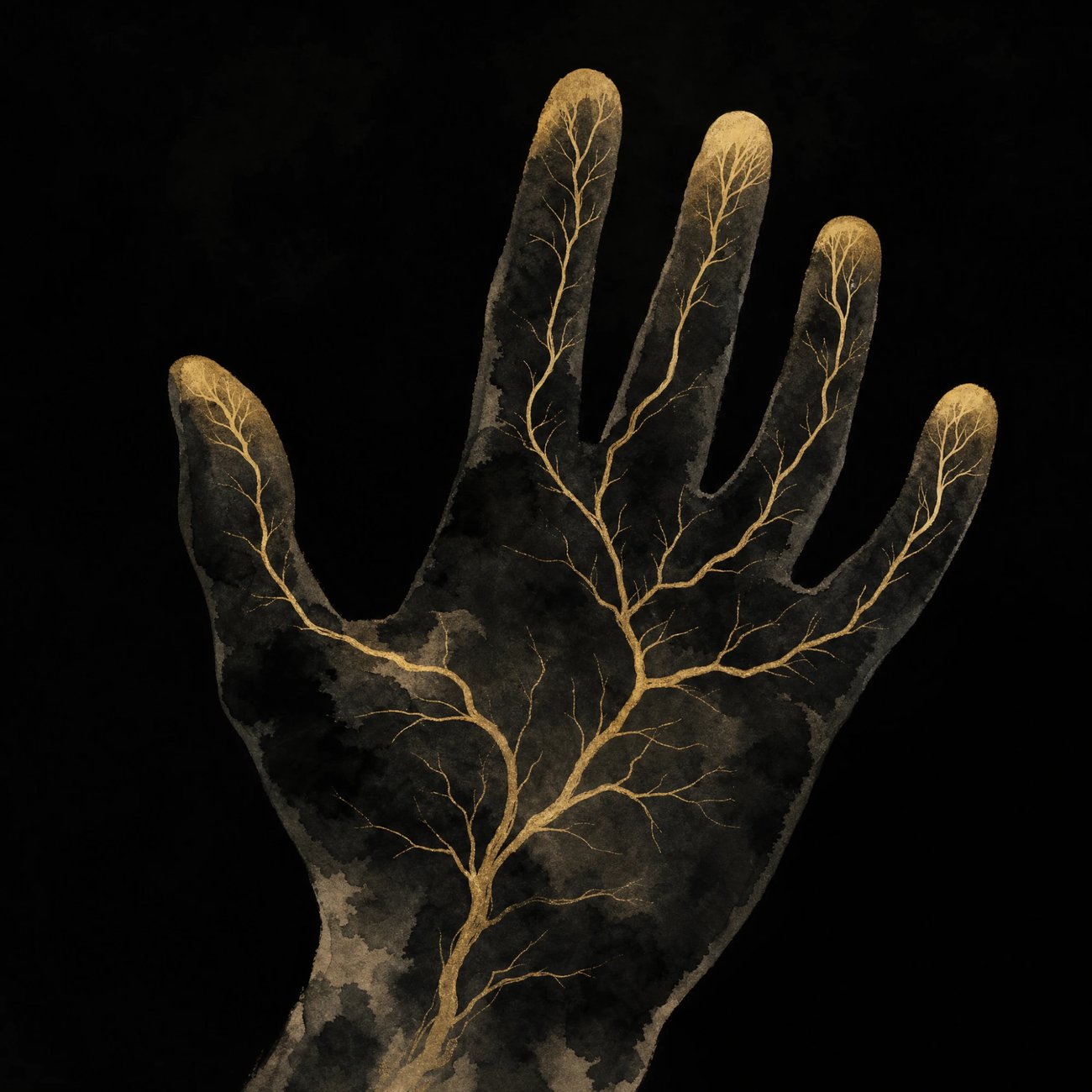
Make a fist and hold it tight for about 30 seconds, then open your hand and watch your palm. The color should come back in almost right away. If it consistently takes noticeably longer than that — especially alongside the leg pain described above — mention it to a doctor rather than assuming it’s just circulation being circulation.
What actually helps day to day
Regardless of which cause fits you, a few things help across the board: a warm foot soak for 15–20 minutes before bed, some form of daily movement (a brisk walk is enough), and consistent sleep — vessel tone tracks sleep quality more closely than people expect.
If your pattern leans toward the cold, low-drive, sluggish-digestion side — the Yang deficiency picture above — Wuji standing meditation is the traditional practice built specifically around rebuilding that kind of internal warmth rather than working around the cold from the outside. It’s free to start with, and ten to fifteen minutes a day is enough.
When this is worth an actual doctor’s visit
- Fatigue and dizziness alongside the cold → a complete blood count, to rule out anemia
- Cold plus weight gain, sluggishness, and dry skin → a thyroid panel
- Leg pain when walking that forces you to stop → a vascular ultrasound
Going further
Food therapy and daily habits work slowly by nature — they’re a long game. If the pattern that fits you is the Yang deficiency side, the complete guide covers the fuller practice progression, the mistakes that quietly stall people’s results, and food therapy for rebuilding that warmth from the inside.
This is a compilation of Traditional Chinese Medicine concepts and general nutrition information, offered for educational and self-care purposes — not a medical diagnosis. If your symptoms are significant, persistent, or come with any of the warning signs above, please see a doctor before making dietary changes or starting a new physical practice.